LED strip lighting has evolved considerably over the last few years. What was once primarily used for simple accent lighting can now form an integral part of sophisticated architectural, commercial, hospitality and residential lighting schemes.
One of the most significant developments has been COB LED strip technology, which produces an exceptionally smooth, continuous line of light without the individual LED dots traditionally associated with LED tape.
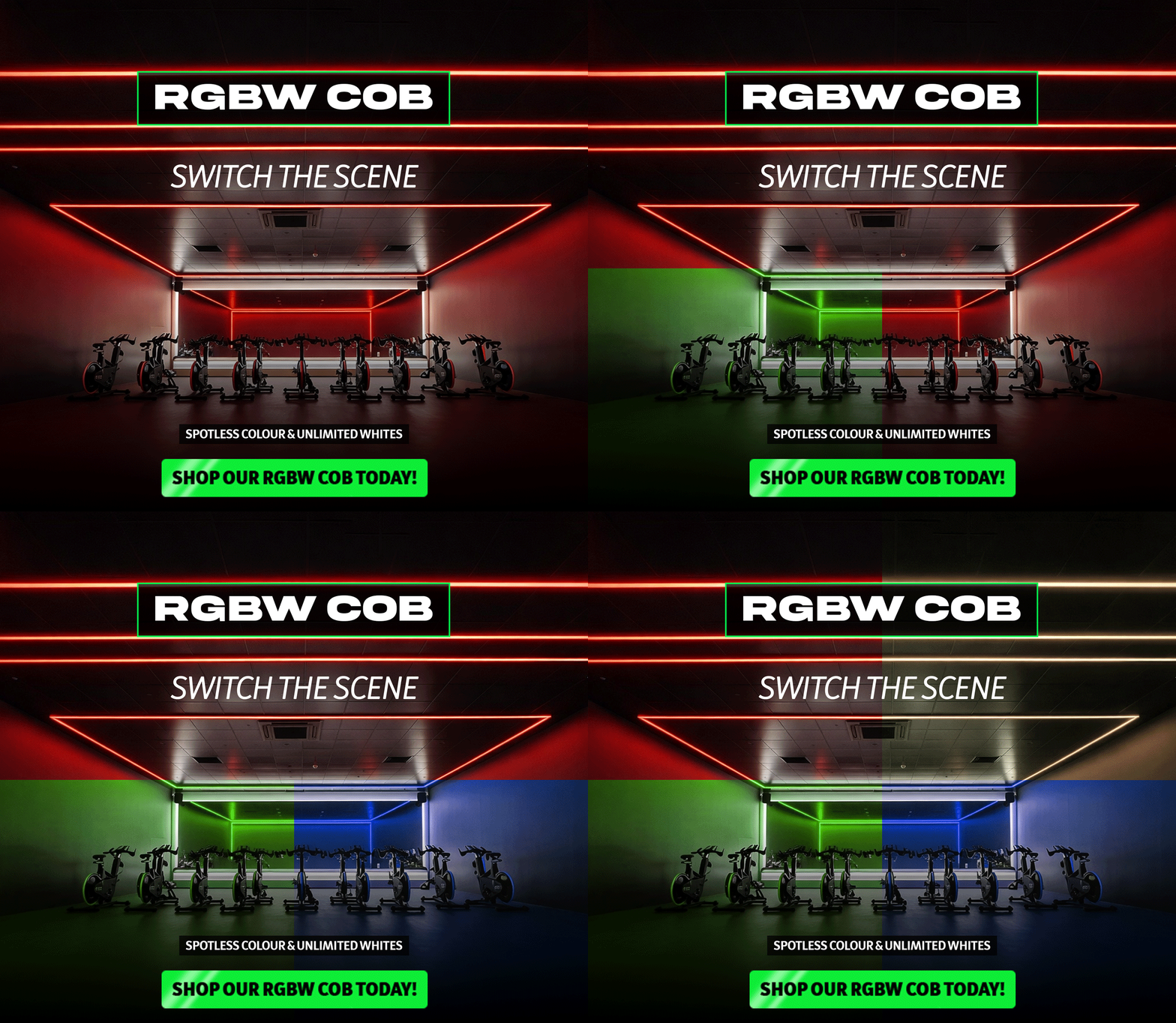
Combine COB technology with RGBW colour control and the result is an extremely versatile lighting solution: vibrant colour-changing effects, multiple shades of white and a virtually spotless linear appearance – all from a single LED strip.
At InStyle LED, our RGBW COB strip is designed for projects where both the quality and versatility of the finished light matter. But what exactly is RGBW COB, how does it work, and when should you choose it?
What is RGBW COB LED strip?
RGBW stands for Red, Green, Blue and White.
Traditional RGB LED strip uses red, green and blue light channels. By adjusting the intensity of each channel, the strip can produce an enormous range of different colours.
RGBW takes this concept a step further by adding a dedicated white channel.
This is important because although an RGB strip can technically create something resembling white by combining red, green and blue, the result is not the same as light produced by a dedicated white LED channel.
With RGBW, you get the best of both worlds: dynamic coloured lighting when required and high-quality white illumination when you want a more conventional lighting environment.
The COB part stands for Chip on Board.
Instead of having relatively large, individually spaced LEDs mounted along the strip, COB technology uses a very high density of tiny LED chips positioned extremely close together.
When illuminated, these effectively merge into one continuous line of light.
The result is dramatically different from conventional LED tape.
What does “spotless” LED strip actually mean?
One of the most common aesthetic problems with traditional LED strip is spotting.
If you’ve ever looked at an LED strip installed inside a profile and been able to see a row of individual bright points, those are the individual LEDs.
Diffusers can help to soften this effect, and increasing the distance between the strip and diffuser can improve the appearance further. However, on shallow profiles or installations where the light source is visible, individual LED points can still sometimes be noticeable.
COB LED strip tackles this problem at source.
Because the LED chips are packed so closely together, the light blends along the strip rather than appearing as individual points.
This creates a smooth, virtually continuous linear light effect.
For architectural lighting, furniture, display lighting and high-end interior projects, that difference can be significant.
Instead of the eye being drawn towards individual LEDs, the installation appears as a clean line of illumination.
Spotless colour as well as spotless white
COB technology isn’t limited to single-colour white LED strip.
With RGBW COB, the same continuous appearance can be achieved when displaying colours.
That means reds, greens, blues, purples and the enormous range of intermediate colours produced through RGB mixing can retain the smooth linear appearance associated with COB.
This makes RGBW COB particularly interesting for projects where lighting has more than one role.
During normal operation, for example, an installation could provide clean white architectural lighting. The same strip could then be transformed into coloured feature lighting for an event, promotion, evening atmosphere or simply a change of mood.
There is no need for separate RGB and white LED strips.
One installation can perform both functions.
One RGBW strip – multiple shades of white
Perhaps one of the most useful characteristics of RGBW COB is the flexibility available within the white spectrum.
Using a compatible InStyle LED controller, the dedicated white channel can be combined with the RGB channels to alter the appearance of the white light.
This allows the user to move between warmer and cooler shades of white, rather than being restricted to one fixed appearance.
Why does this matter?
Because colour temperature can dramatically change how a space feels.
Warmer whites tend to create a softer, more relaxed atmosphere and can work particularly well in residential interiors, restaurants, bars, hotels and hospitality environments.
Cooler whites can produce a cleaner, crisper appearance that may be more appropriate for contemporary interiors, displays or task-oriented spaces.
Rather than deciding permanently on one colour temperature at the specification stage, RGBW provides much greater flexibility after installation.
A space can therefore change throughout the day or according to how it is being used.
From functional lighting to atmosphere at the touch of a button
Imagine a bar or restaurant.
During preparation or cleaning, a brighter, cooler white may be useful. As customers arrive, the lighting can move towards a warmer and more comfortable white.
Later in the evening, subtle colours can be introduced to change the atmosphere completely.
The same principle applies to residential interiors.
Kitchen cabinet lighting might operate as practical white illumination while food is being prepared, before changing to a warm white or subtle colour during the evening.
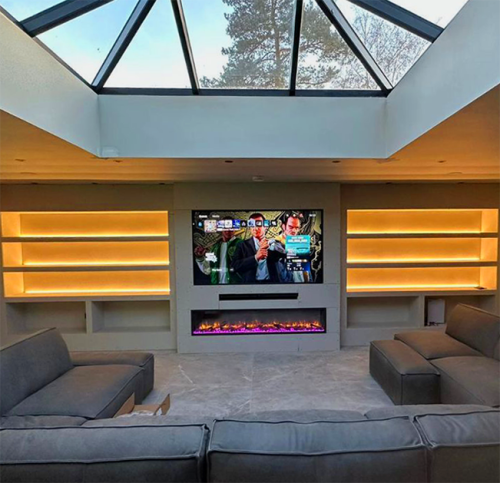
In a media room, cinema room or games room, the lighting can move from everyday white illumination to dramatic colours when the room is in use.
Retail environments can use clean white light during normal trading before introducing brand colours or promotional lighting for particular displays and events.
This ability to switch the scene without changing the lighting installation itself is one of RGBW’s biggest advantages.
Why COB works particularly well for architectural details
There are many applications where the LED strip itself is either visible or installed close enough to a surface for spotting to become apparent.
These are exactly the situations where COB technology comes into its own.
Consider an LED strip installed underneath a kitchen cabinet. If individual LEDs are reflected from a polished worktop, the finished installation can look less refined than intended.
The same issue can occur with glass shelving, polished stone, high-gloss furniture and reflective surfaces.
A continuous COB light source can significantly reduce this visual distraction.
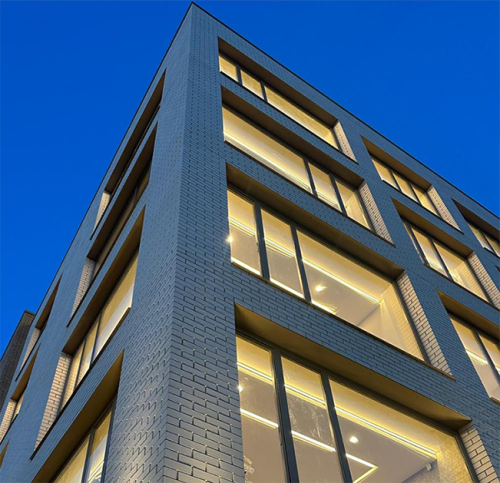
This makes RGBW COB particularly suitable for applications including kitchen under-cabinet lighting, media walls, feature ceilings, shelving, display cabinets, hotel interiors, bars, restaurants and architectural details.
It can also work extremely well where LED strip is integrated into joinery or furniture and the designer wants the lighting to appear as part of the architecture rather than an obvious row of LEDs.
Do you still need an aluminium LED profile?
A common misconception is that because COB produces a continuous light effect, an aluminium profile is no longer necessary.
That’s not necessarily the case.
LED profiles perform several functions beyond simply diffusing the appearance of individual LEDs.
They can provide a much neater physical installation, protect the LED strip from accidental contact and help create a professional finished appearance.
Aluminium also assists with heat management.
The appropriate profile therefore remains an important consideration when designing a professional LED strip installation.
What COB changes is the quality of the light source inside that profile. Because the light is already much more uniform, it can produce excellent results even in applications where the profile is relatively shallow.
RGBW control is an important part of the system
An RGBW strip is only one component of the finished installation.
To make full use of its capabilities, the strip needs to be combined with the appropriate LED driver, RGBW receiver and controller.
The controller is what allows the user to adjust colours, brightness and the white appearance.
Depending on the chosen control system and project requirements, this can provide convenient control over the finished installation without having to physically access the LED strip itself.
For larger or more sophisticated projects, control should therefore be considered at the design stage rather than as an afterthought.
The length of the runs, power requirements, zoning and how the client wants to operate the lighting can all influence the most appropriate system configuration.
Long runs without constantly feeding power into the strip
Another practical consideration with LED strip is voltage drop.
As the length of an LED strip installation increases, electrical resistance can result in reduced voltage towards the end of a run. If this isn’t properly accounted for, brightness or colour consistency can suffer.
Our RGBW COB strip is engineered to support continuous runs of up to 10 metres powered from one end, helping to simplify installations while maintaining an even output across the run.
This can be particularly useful on larger architectural features where repeatedly introducing power feeds would make installation more complicated.
As with any professional LED installation, however, the complete system still needs to be correctly specified. Total wattage, cable lengths, driver capacity, controls and the installation environment all need to be considered.
Made-to-measure RGBW COB LED strip
Not every project conveniently works in exact metre lengths.
Kitchen units, shelving, ceiling details, joinery and architectural features all have their own dimensions. Cutting LED strip on site is possible, but it also introduces additional work for the installer.
This is why InStyle LED offers a bespoke cut-to-length and soldering service.
RGBW COB strips can be prepared to the required dimensions, with the appropriate leads professionally soldered before dispatch.
For electricians, lighting designers, shopfitters, joiners and other trade customers, this can remove a time-consuming part of the installation process.
Instead of carrying out multiple cuts and solder connections on site, prepared strips can arrive ready for installation.
It also makes specifying more complicated projects considerably easier, particularly where multiple different strip lengths are required.
Where does RGBW COB make the most sense?
RGBW COB isn’t necessary for every LED strip project.
If an installation only ever requires one fixed shade of white, for example, a high-quality single-colour COB strip may be the simpler solution.
RGBW becomes particularly valuable when a project requires both high-quality white lighting and the ability to introduce colour.
It’s also well suited to spaces whose purpose or atmosphere changes.
Hospitality is an obvious example. A hotel, restaurant or bar can require completely different lighting environments at different times of day.
High-end residential projects increasingly have similar requirements. Homeowners may want clean architectural lighting during the day, warmer ambient illumination in the evening and colour-changing effects for entertaining.
Commercial and retail environments can benefit too, particularly where brand colours, seasonal displays or promotional lighting are required.
The important point is that RGBW doesn’t force the user to choose between practical white lighting and decorative coloured lighting.
It provides both.
Designing the complete RGBW COB system
Getting the best from RGBW COB involves more than simply choosing the strip.
Before ordering, it’s worth considering the overall installation:
- Where will the LED strip be installed?
- What lengths are required?
- Will the strip be visible directly or indirectly?
- Which LED profiles will be used?
- How many separate lighting zones are required?
- Where will the drivers and receivers be located?
- How does the client want to control the lighting?
- Will the installation require bespoke cut lengths or pre-soldered cables?
Answering these questions at the beginning can make installation considerably easier and help ensure that all components work together correctly.
For larger commercial, hospitality or architectural projects, discussing these requirements before ordering can also prevent unnecessary compromises later in the installation.
A cleaner, more flexible approach to colour-changing LED lighting
RGBW COB brings together two of the most useful developments in modern LED strip lighting.
COB technology provides the smooth, continuous and virtually spotless linear appearance increasingly expected from premium installations.
RGBW technology provides the flexibility to move between vivid colours and a wide range of white appearances from the same strip.
Combined, they create an LED lighting solution capable of changing with the space around it.
From subtle warm-white illumination in a restaurant to dramatic colour-changing architectural features – and from spotless kitchen lighting to commercial displays – RGBW COB provides designers and installers with considerably more creative freedom.
And when the strip is supplied cut to length, professionally soldered and matched with the correct drivers and controls, installation can be made simpler too.
Looking at RGBW COB for an upcoming project? InStyle LED can help specify the strip, drivers, controllers, profiles and accessories required, as well as producing bespoke cut-to-length strips ready for installation.