Waterproof, Made-to-Measure Lighting for Demanding Environments
LED strip lighting is incredibly versatile. It can be used for everything from subtle architectural details and illuminated shelving to bathrooms, kitchens, gardens, building exteriors and large commercial installations.
However, once an installation is exposed to water, moisture or the elements, choosing the correct LED strip becomes much more important.
This is where IP ratings come in.
You may have seen LED lighting products described as IP20, IP65, IP67 or even IP68, but what do these numbers actually mean? More importantly, when should you choose IP67 LED strip lights, and what happens to that protection when an LED strip needs to be cut to a specific length?
In this guide, we’ll explain what IP67 means, where this type of LED strip can be used and why professionally cutting and sealing LED tape can make such a difference to the reliability and convenience of an installation.
What Does IP67 Mean?
IP stands for Ingress Protection. An IP rating describes the level of protection provided against the ingress of solid objects and water.
The rating consists of two numbers.
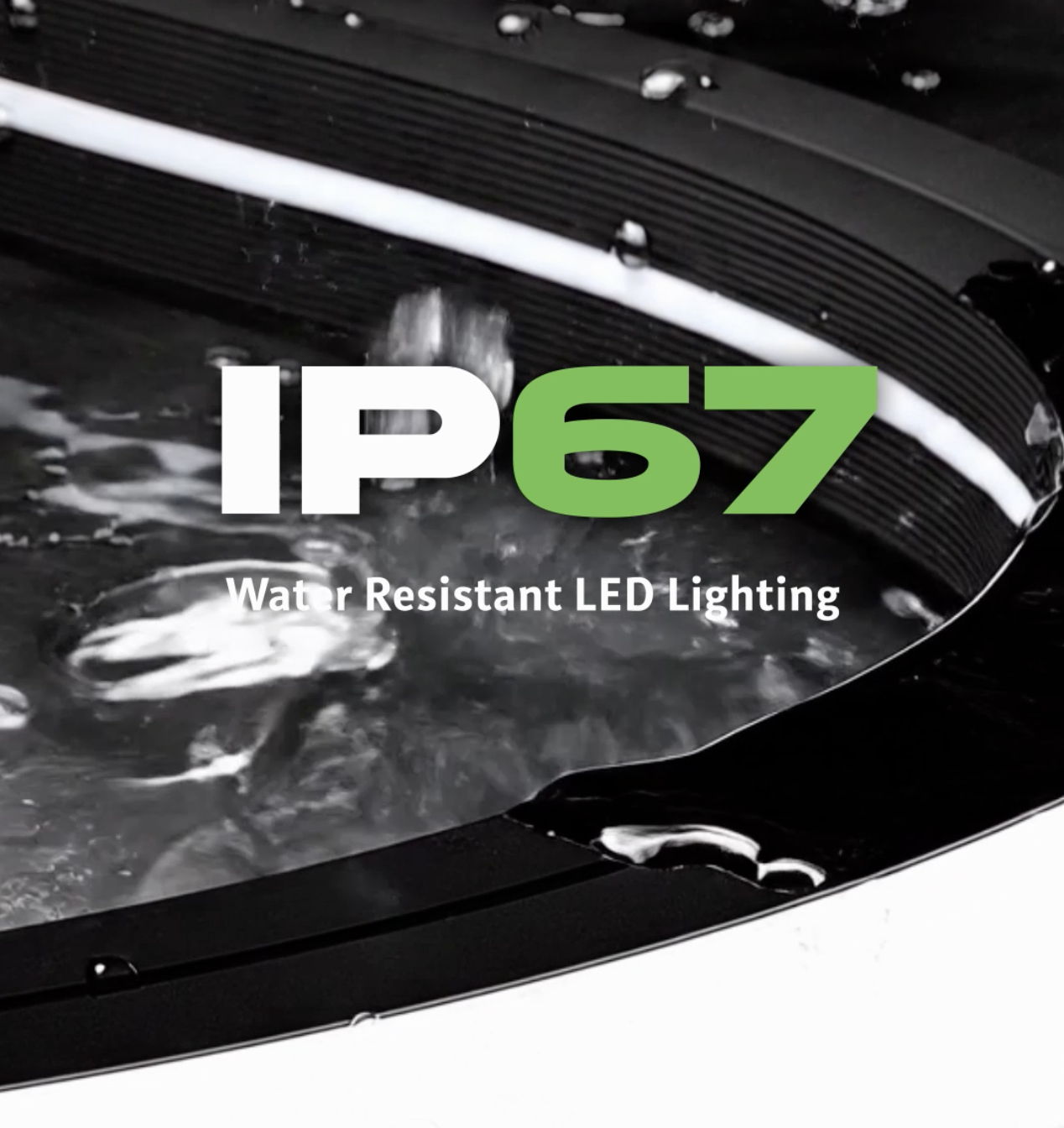
For IP67, the first number – 6 – relates to protection against solid particles. A rating of 6 represents the highest level in this part of the classification and means the enclosure is dust-tight.
The second number – 7 – relates to protection against water. IPX7 indicates protection against temporary immersion in water under defined test conditions.
Together, this makes IP67 suitable for considerably more demanding environments than standard indoor LED tape.
However, it is important not to interpret IP67 simply as meaning “completely waterproof in every possible situation”. The installation method, connections, power supply, surrounding environment and intended application all still need to be considered.
What’s the Difference Between IP20, IP65 and IP67 LED Strip?
One of the easiest ways to understand IP67 is to compare it with some of the other ratings commonly encountered when specifying LED strip lighting.
IP20 LED strip is primarily intended for dry indoor environments. It is commonly used for applications such as shelving, furniture, coving, display lighting and interior architectural details where there is no significant exposure to water.
IP65 LED strip offers increased protection against water and is often selected for environments where occasional splashes or moisture may occur. The precise construction of an IP65 product can vary, so its suitability should always be checked against the intended application.
IP67 LED strip provides a significantly higher level of water protection and is intended for more demanding environments where exposure to moisture or water needs to be taken seriously.
It is worth remembering that choosing the highest IP rating isn’t automatically the best option.
The objective should always be to specify the correct level of protection for the environment.
If an LED strip is being installed inside a completely dry cabinet, for example, IP20 may be perfectly adequate. If that same strip is being incorporated into an exterior architectural feature, IP67 may be much more appropriate.
Where Can IP67 LED Strip Lights Be Used?
The additional protection offered by IP67 opens up a much wider range of potential applications.
One obvious example is outdoor architectural lighting.
LED strips are increasingly incorporated into external walls, steps, paths, decking, landscaping features, building façades and other architectural details. In these environments, exposure to rain and moisture becomes an important part of the product specification.
IP67 LED strip can also be useful in bathrooms, spas, leisure facilities and other high-moisture environments.
Electrical safety regulations and the specific installation zone must always be considered in these situations. An IP rating alone does not automatically mean a product is suitable for every position within a bathroom, swimming pool or similar environment.
Commercial applications are another important area.
Hotels, restaurants, bars, retail environments, leisure facilities and other commercial buildings frequently incorporate LED lighting into locations where cleaning, moisture or environmental exposure makes a more heavily protected product desirable.
IP67 LED strip can therefore provide designers and installers with considerably greater flexibility when planning lighting projects.
Why Cutting Waterproof LED Strip Can Create a Problem
This is an aspect of waterproof LED strip that can sometimes be overlooked.
LED tape is manufactured in defined lengths and normally has designated cutting points. These allow the strip to be shortened to suit an installation.
With standard indoor LED tape, cutting at one of these points is relatively straightforward.
With waterproof LED strip, there is an additional consideration.
The protective enclosure or coating surrounding the LED tape is part of what provides its resistance to water. Once the strip is cut, that protective barrier has effectively been opened.
The newly exposed end therefore needs to be properly resealed.
Similarly, if cables need to be attached to the LED tape, the connection point needs to be treated appropriately if the required level of environmental protection is to be maintained.
Simply purchasing IP67 LED tape doesn’t necessarily mean that a finished, cut and connected installation automatically retains the intended protection.
The quality of the cutting, connection and sealing process matters too.
Why Made-to-Measure LED Strip Can Make Installation Easier
Many LED strip installations aren’t conveniently designed around standard reel lengths.
A lighting detail might require 1,175mm in one location, 2,430mm somewhere else and several completely different lengths throughout the rest of the project.
Traditionally, this means an installer may need to measure the required lengths, cut the LED tape on site, attach cables and then seal the individual sections.
For a small installation this may be manageable.
For larger projects involving numerous individual runs, however, the process can become much more time-consuming.
There is also greater potential for inconsistent connections or sealing when large numbers of sections have to be prepared on site.
This is where a made-to-measure LED strip service can be particularly useful.
Instead of receiving reels that need to be prepared during installation, the LED strip can be supplied in predetermined lengths based on the requirements of the project.
Each section can then be prepared before it reaches site.
Instyle LED’s Bespoke IP67 LED Strip Service
At Instyle LED, we can provide a bespoke cut-to-length IP67 LED strip service for projects requiring waterproof or environmentally protected LED lighting.
Rather than simply supplying a reel of LED tape, we can prepare individual strips according to the measurements required for the project.
The LED tape is cut to the required lengths, professionally sealed and supplied with pre-terminated leads, helping to reduce the amount of preparation required during installation.
This is particularly useful when a project involves multiple LED strip runs of different lengths.
For example, an installation might require dozens of separate strips for architectural features, joinery, exterior details or commercial displays. Providing the required measurements in advance means the individual sections can be prepared accordingly.
The result is essentially a ready-to-install LED strip solution rather than a collection of reels that still need substantial preparation on site.
Professionally Sealed In-House
One of the most important elements of the service is the sealing process itself.
Instyle LED’s IP67 LED strips are prepared, sealed and tested in-house in the UK before being dispatched.
Depending on the LED tape and specification, the sealing process can include appropriate sealing materials, end caps and heat-shrink protection to help maintain the integrity of the finished strip.
Pre-terminated leads can also be fitted as part of the preparation process.
This means installers aren’t required to carry out the same cutting, soldering and sealing operations once the product arrives on site.
For contractors working against installation deadlines, removing these additional preparation stages can be particularly valuable.
Made to Your Measurements
“Made to measure” doesn’t simply mean offering a few different standard lengths.
LED tape has designated cutting intervals determined by the product itself. Subject to those cutting points, strips can be prepared very closely to the dimensions required by the installation.
This can be particularly useful for architectural and joinery applications where the lighting needs to follow a specific feature or fit within a predetermined space.
Accurate lengths can also help reduce unnecessary waste.
Rather than cutting sections from multiple reels on site and potentially being left with unusable remnants, the required strips can be prepared specifically for the project.
For larger installations, this can make ordering and installation considerably easier to manage.
Different Types of LED Tape Can Be Prepared
Waterproofing doesn’t mean that every project has to use exactly the same type of LED strip.
Depending on the requirements of the installation, different types of LED tape can be prepared and sealed.
This can include options such as COB LED strip, RGB, RGBW, CCT and single-colour LED tape, allowing the lighting specification to be based on the desired visual result as well as the environmental requirements of the project.
COB LED strip, for example, is increasingly popular for applications where a smooth, continuous line of light is required.
RGB and RGBW products allow colour-changing installations to be created, while CCT LED strip can provide adjustable white colour temperatures.
The important point is to establish both the lighting requirement and environmental requirement before selecting the most appropriate LED tape.
Don’t Forget About the Connections
The LED strip itself is only one part of a waterproof lighting installation.
Connections are equally important.
A high-quality IP67 LED strip can still become vulnerable if the electrical connection between sections or cables isn’t adequately protected.
For this reason, suitable waterproof cable-to-cable connectors can form an important part of the installation.
These allow cables to be connected while providing environmental protection around the connection point.
For projects involving multiple sections of LED strip, planning the location and type of connections before installation can make the entire system easier to install, maintain and troubleshoot.
It is also important to consider the location and IP rating of other components, including LED drivers, controllers and receivers.
A lighting system should always be considered as a whole rather than assuming that an IP67 LED strip automatically makes every component within the installation waterproof.
Planning an IP67 LED Strip Project
Good planning can make a significant difference when specifying made-to-measure LED strip.
Before ordering, establish the exact lengths required and identify the cutting increments available for the chosen LED tape.
Consider where power will enter each strip and therefore where the pre-terminated leads should be positioned.
The total wattage of each run should also be calculated so that suitable LED drivers can be specified.
For larger projects, voltage drop and maximum recommended run lengths may also need to be considered.
Controllers, receivers and dimming equipment should be selected at the same stage rather than treated as an afterthought.
Providing this information at the beginning of a project makes it much easier to create a complete lighting specification.
Is IP67 LED Strip Right for Your Project?
IP67 isn’t necessary for every LED lighting installation.
For dry indoor environments, a lower IP rating may be entirely appropriate and potentially easier to work with.
However, where LED strip will be exposed to moisture, water or demanding environmental conditions, IP67 provides an important additional level of protection.
The key is to look beyond the IP rating printed on the product specification.
Consider how the LED tape will be cut, how cables will be attached, how exposed ends will be sealed and how the individual sections will be connected once installed.
These details can ultimately determine how reliable the finished installation will be.
For projects requiring multiple or unusual lengths, a professionally prepared made-to-measure IP67 LED strip service can also remove a considerable amount of work from the installation process.
At Instyle LED, strips can be cut to the required measurements, professionally sealed, fitted with leads and tested before dispatch, giving installers a bespoke solution prepared specifically for the project.
The result is simpler: specify the LED tape, provide the measurements and receive professionally prepared IP67 strips ready for installation.