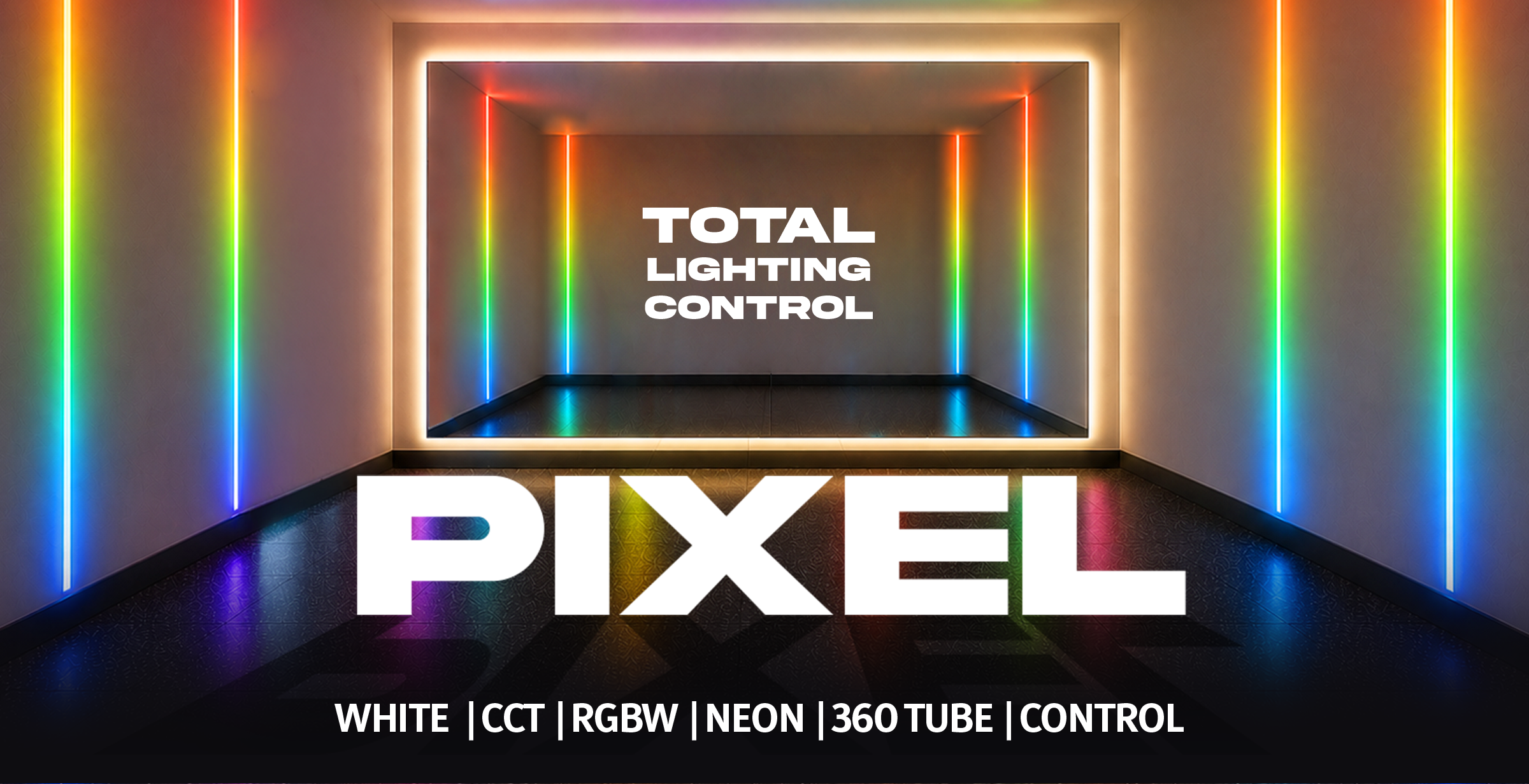
Standard LED strip lighting usually changes as one continuous run. With pixel LED lighting, different sections of the strip can be controlled independently. That opens up effects such as colour chases, moving patterns, flowing gradients and directional light.
Pixel lighting is often called SPI LED lighting. SPI is the control protocol used to send instructions to the pixel LEDs. The exact level of control depends on the product: some versions address sections of strip, while others can control smaller groups or individual pixels.
At InStyle LED, our pixel range includes single-colour white, tunable white, RGBW, COB, Neon Flex and architectural tube options. Whether you want subtle movement or a more vivid display, the right combination of product, controller and programming can make the lighting an active part of the design.
What is pixel LED lighting?
With a standard single-colour, CCT or RGBW LED strip, the whole connected run generally responds together. Change the brightness, colour or colour temperature and the entire strip changes at the same time.
Pixel LED tape works differently. It contains control components that allow the strip to be divided into addressable sections. The controller sends instructions to those sections, allowing effects to travel along the strip or vary across its length.
This makes pixel LED lighting useful when a project needs more than a static colour. A warm-white effect could appear to flow down a staircase, a colour sequence could move around a bar, or a branded display could use changing colours to draw attention to a feature.
The effect depends on the strip, its pixel configuration and the controller used. It is important to check the product specification before planning the control system.
What does SPI mean?
SPI stands for Serial Peripheral Interface. In pixel LED systems, it describes the way control data is sent from a compatible controller to the digital ICs in the lighting product.
The controller sends instructions that tell the pixels or groups of pixels what to do. Compatible SPI controllers can run pre-set effects or allow users to adjust colours, brightness and patterns. Some systems can also be programmed for a particular installation.
SPI products and controllers need to be compatible with one another. Check the supported IC type, voltage, pixel arrangement and control method when specifying a system. InStyle LED offers pixel SPI LED strip and a range of pixel SPI controllers.
Pixel lighting options for different projects
Pixel technology is available in several types of LED product. Choosing the right one starts with the intended effect and the practical requirements of the installation.
Single-colour white pixel tape
White pixel tape combines a consistent white-light output with the ability to create movement and sequencing effects. It can be used where the project needs functional white light with added animation, such as a moving pulse or running effect.
CCT tunable white pixel tape
CCT pixel tape allows the colour temperature to change between warm and cool white. The InStyle email campaign features a version that shifts between 2700K and 6500K, with directional effects available through compatible control.
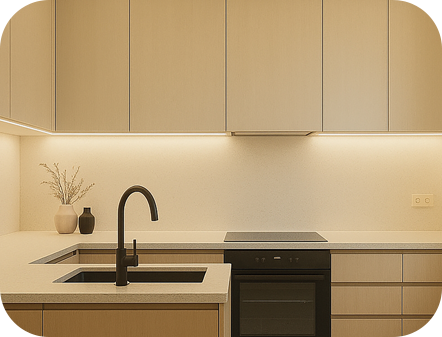
This can be useful when a space needs both a warmer atmosphere and a cooler white setting. CCT pixel lighting can also combine changes in colour temperature with movement along the strip.
RGBW pixel tape
RGBW combines red, green and blue colour output with a dedicated white channel. Pixel control can add movement and colour sequences, while the white channel provides a separate white-light option.
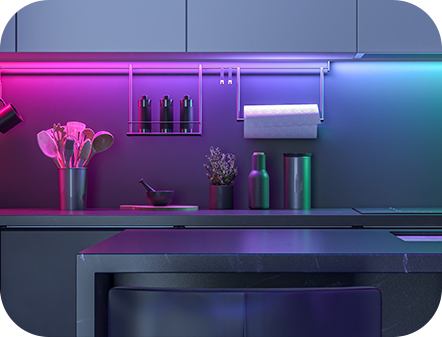
This is useful when a project needs both vivid colour effects and a clean white setting. InStyle LED also offers high-density and dotless COB pixel options, depending on the product selected. The range includes a 24V RGBW pixel COB strip rated at 21W per metre, with product specifications and cut points listed on the data sheet.
Pixel Neon Flex
Pixel Neon Flex combines addressable lighting effects with a diffused Neon Flex appearance. The email highlights side-bend and 360° multi-bend options, including an IP67 version. These products can be considered for signage, outlines and feature lighting where the shape and finish of the light are part of the design.
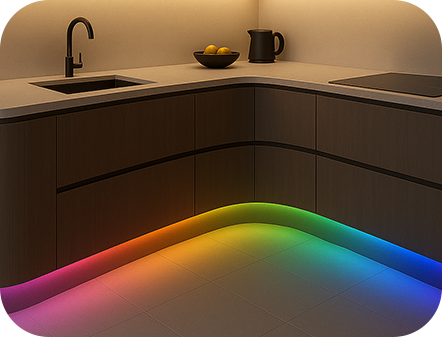
The required bend direction, dimensions, cut points and environmental protection should be checked for the specific product. See the RGBW SPI Neon Flex range for available options.
Pixel architectural tubes
Pixel control is also available in architectural tube lighting. The email features 360° pixel tubes, described as fully diffused, omnidirectional lighting for suspended or surface-mounted installations.
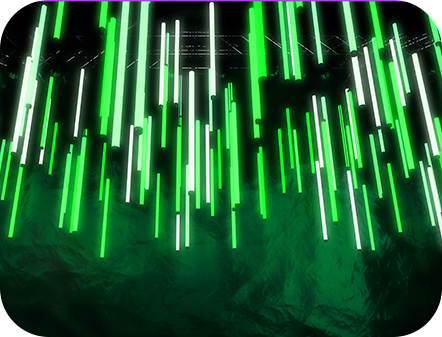
Tubes can create a different visual effect from strip or Neon Flex, particularly when used as visible fittings within a space. Consider the mounting method, spacing, control requirements and how the tubes will work with the rest of the lighting scheme.
Where can pixel LED lighting be used?
Pixel lighting is suited to projects where movement, colour or sequencing can support the design or experience. Common applications include:
- Retail displays and shop windows
- Bars, restaurants and hospitality venues
- Signage and branded environments
- Exhibition stands and event spaces
- Feature walls and architectural details
- Staircases, corridors and reception areas
- Residential feature lighting
- Immersive and entertainment spaces
The scale can vary from a short residential feature to a larger commercial installation. The system design, power supply, control equipment and wiring need to match the product and the size of the project.
Plug-and-play or programmed control?
A pixel system can be set up in different ways. A plug-and-play controller may be suitable when the required effects are available within the controller and the project needs straightforward operation.
For a more specific result, a system can be configured or programmed around the installation. InStyle LED’s email campaign highlights wireless and smart controllers, DMX512-to-SPI decoders and pre-programmed sequences. The right option depends on the intended effect, the control platform and the equipment already being used on site.
For projects using DMX512, a compatible decoder can convert the DMX signal into SPI control data for the pixel lighting. Compatibility should be confirmed across the controller, decoder and LED product before installation.
Plan the wiring, power and control together
Pixel lighting needs more planning than simply choosing a colour and connecting a standard strip. Before ordering, consider:
- The type and length of pixel product required
- The pixel or segment configuration
- The controller and supported IC type
- Whether wireless, app, wall-control or DMX operation is required
- The power supply requirements and cable routes
- The IP rating needed for the installation environment
- Whether the system needs custom cutting, soldering or programming
Longer or more complex runs may require careful power planning. The supply arrangement depends on the product, its wattage, the installation length and the manufacturer’s guidance. InStyle LED can provide technical support, including wiring diagrams and power calculations, to help plan a suitable configuration.
Bespoke pixel lighting from InStyle LED
Pixel lighting gives installers and designers more ways to shape how a space looks and feels. It can provide movement to a simple white line, allow a tunable-white effect to travel along a feature or create vivid RGBW sequences across a venue.
InStyle LED supplies pixel products and compatible control options, with bespoke cutting and soldering available for selected products. We can also discuss pre-programmed sequences and technical requirements for your installation.
Explore our pixel LED strip range and pixel controllers, or contact our team at sales@instyleled.co.uk to discuss your project.
Frequently asked questions about pixel LED products
What is the difference between pixel LED strip and standard LED strip?
Standard LED strip generally changes as one connected run. Pixel LED strip can control addressable sections independently, allowing effects such as colour chases, wipes and moving gradients.
What does SPI mean in LED lighting?
SPI means Serial Peripheral Interface. It is the control protocol used by compatible controllers to send instructions to digital ICs in pixel LED products.
Can pixel LED tape produce white light?
Yes. InStyle LED’s range includes single-colour white pixel tape, CCT tunable-white pixel tape and RGBW pixel products with a dedicated white channel. Availability and features vary by product.
Can pixel LED lighting be controlled by DMX?
Pixel lighting can be used with DMX systems when a compatible DMX-to-SPI decoder is included. Check that the decoder supports the chosen product and control configuration.
Is pixel Neon Flex suitable for outdoor use?
Some pixel Neon Flex options are rated IP67, according to the product information in the campaign. Check the specification for the exact product and confirm that it suits the installation conditions before use.
Can InStyle LED prepare pixel products to custom lengths?
Bespoke cutting and soldering are available for selected products. Contact our team with the product type, measurements and project details so we can confirm the available options.